Commentary: SNAP junk food bans punish poor families
Published in Op Eds
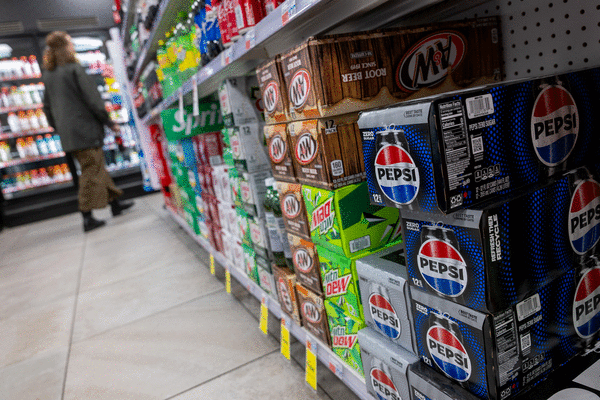
Major changes to the Supplemental Nutrition Assistance Program, courtesy of President Donald Trump and his GOP-controlled Congress, have arrived across the nation. The reforms to the food assistance program for the needy come via the 2025 “One Big Beautiful Bill Act.”
The law mandates that SNAP recipients aged 18 to 64, and parents who don’t have children under 14 must document that they are working or volunteering for a total of 80 hours a month. If they don’t, they risk losing benefits.
In Indiana and other states, other reforms of SNAP should delight the Fat Nag. The Fat Nag, that is, yours truly. I have railed for decades against sugar, fast foods and other edible evils. My alter ago has lectured, pleaded and begged my readers to run for their lives from Doritos, Ding Dongs and Sprite.
America is drowning in fat. In 2023, around 40% of adults were defined as obese, according to data from Centers for Disease Control and Prevention.
So, you might conclude that the Nag is delighted that residents of Indiana, Iowa and three other states are now forbidden from using SNAP food assistance for soda, candy and other foods, after waivers approved by the U.S. Department of Agriculture that began Jan. 1.
Not.
At least 18 states will enact federal waivers prohibiting the purchase of certain foods this year. The new restrictions vary from state to state but are being promoted by the Trump administration’s Make America Healthy Again campaign (MAHA). It’s “part of a push by Health Secretary Robert F. Kennedy Jr. and Agriculture Secretary Brooke Rollins to urge states to strip foods regarded as unhealthy from the $100 billion federal program — long known as food stamps — that serves 42 million Americans,” the Associated Press reports. SNAP benefits are provided through an electronic transfer, like a debit card, and accepted at most grocery stores.
MAHA is encouraging states to ban SNAP recipients from purchasing items like pop, candy, energy drinks and highly processed desserts.
Drinking sugar-loaded beverages can increase the risk of Type 2 diabetes, high blood pressure, heart disease, cancer and other maladies. High consumption of sugary beverages has been linked with an increased risk of premature death, according to the study, “How Sweet is it?” from the Harvard University T.H. Chan School of Public Health.
For example, a Fanta Orange pop contains 45 grams of sugar, the equivalent of 13 teaspoons, the Harvard study found.
However, the Nag is not cheering these new SNAP restrictions. In fact, the Nag is incensed. I cannot abide this so-called MAHA ploy. It is a sham, a fraud and just another Trump “policy” that is just so much political flim-flam.
First off, Trump has dispatched a man with absurdly low credibility, Robert F. Kennedy Jr., to lead the effort. Kennedy has endowed America with new dietary guidelines that prioritize red meats and cheeses, which are high in saturated fats, instead of plant-based proteins. Health experts are alarmed.
I love a juicy bone-in ribeye, but how does loading up on that high-fat food make us healthy again?
Last year, Trump’s Agriculture Department eliminated two programs that provided schools and food banks funds to buy food from local farms and ranchers, halting more than $1 billion in federal spending for the programs, Politico reported.
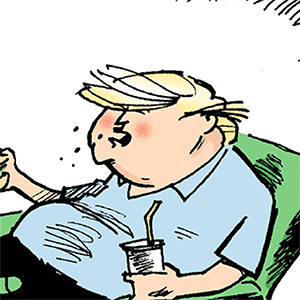
Get out the fat? Take a gander at Trump, the ultimate symbol of eating hypocrisy. He is certainly not practicing what his administration pretends to preach. The president is notorious for his penchant for Kentucky Fried Chicken and Big Macs.
This ban on sweet SNAP purchases is being handed down from Trump’s malevolent mountain. It is aimed at punishing low-income, struggling families.
That “One Big Beautiful Bill Act” is delivering $1 trillion in tax cuts to the top 1% of wealthy Americans, while cutting more than $1 trillion from SNAP, Medicaid and other health programs the poorest Americans rely on, shows an analysis by the Center for American Progress.
Trump’s “healthy eating” mandates undermine and humiliate the low-income and working families who struggle to access healthy and fresh eating options. The message is that poor and working-class families don’t deserve to make their own choices or pursue even the small joys of a soda or sweet. It’s insulting and demeaning.
If this administration were serious about improving health outcomes for the poor, it would be plowing more federal funding into eliminating food deserts and supporting more health education programs for the families who have paltry options. Providing more education to help them shun processed foods, saturated fats and sugar in their daily diets. And boosting, not slashing, anti-hunger programs.
Not.
____
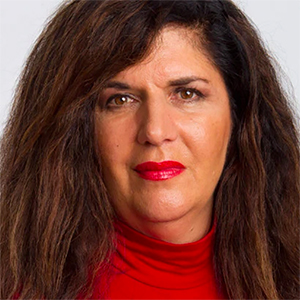
Laura Washington is a political commentator and longtime Chicago journalist.
___
©2026 Chicago Tribune. Visit at chicagotribune.com. Distributed by Tribune Content Agency, LLC.






































Comments