C.J. Holmes: Mikel Brown Jr., Darius Acuff Jr. and the 5 guards who fit different Nets priorities
Published in Basketball



NEW YORK — At No. 6, the Nets’ board could be filled with appealing guards, leaving them to choose the skill set that best reflects their priorities.
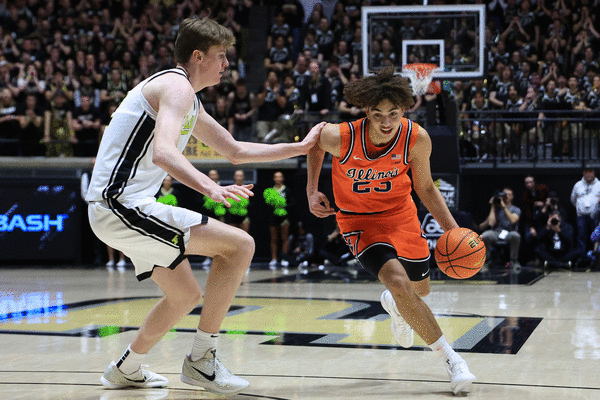
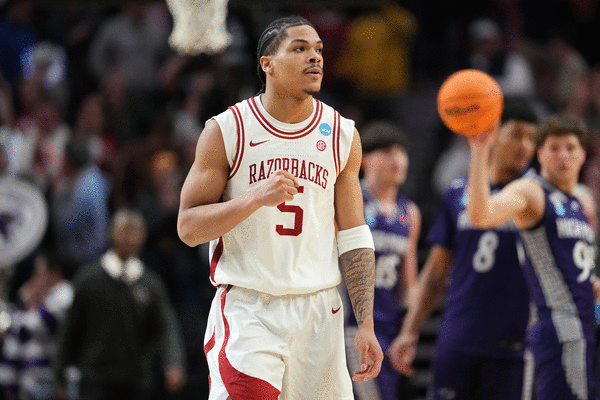
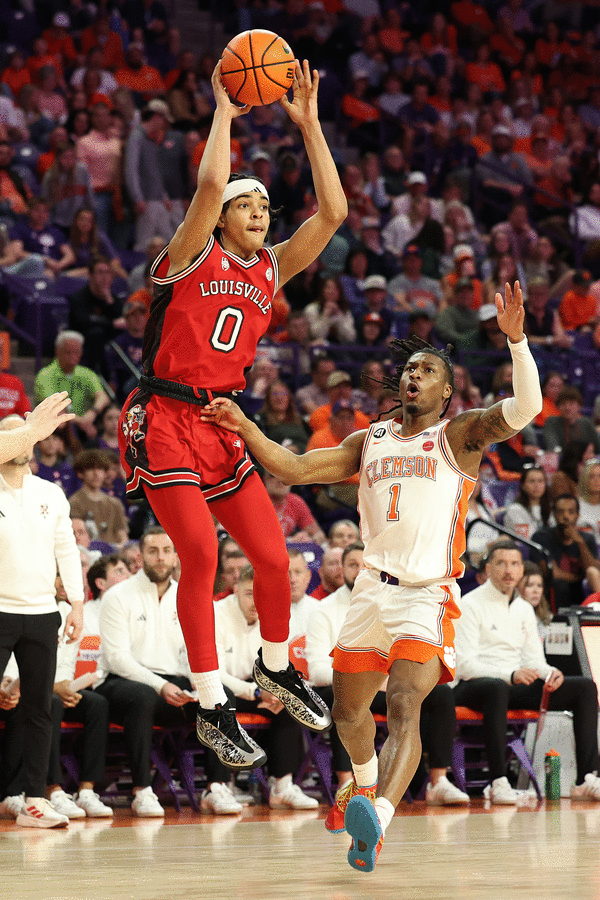
Arkansas’ Darius Acuff Jr., Louisville’s Mikel Brown Jr., Arizona’s Brayden Burries, Illinois’ Keaton Wagler and Houston’s Kingston Flemings all sit in the range Brooklyn may have to sort through if they keep the pick.
The combine didn’t decide that debate. Measurements don’t guarantee production and athletic testing doesn’t settle a draft board. But size, length, movement, explosiveness and shooting data does help frame a prospect’s competitive ceiling and the traits that may support a long career. That’s important when a team is trying to separate guards with different strengths.
Last offseason, the Nets’ prospect profile appeared to come from two overlapping priorities. General manager Sean Marks has long valued positional size, two-way versatility, creation, character and basketball IQ. Head coach Jordi Fernández, meanwhile, has emphasized competitiveness, unselfishness, ball pressure, defensive versatility, 3-point shooting and ball movement.
Viewed through that lens, Brown may have strengthened his case more than anyone in this group.
— If Brooklyn wants the cleanest all-around fit, Mikel Brown Jr. stands out: Brown led the five guards in standing reach at 8-feet, 4.5 inches and wingspan at 6-feet, 7.5 inches. He also finished first in lane agility at 10.57 seconds, second in shuttle run at 2.89 seconds, tied for second in standing vertical leap at 33.5 inches, and second in max vertical at 39.5 inches. Then he shot 18 for 25 on spot-up 3s, good for 72%.
Brown’s case starts with how little he gives away. He has enough height for the position, excellent length, strong agility, high-end vertical pop and one of the best spot-up shooting marks in the group. His standing reach and wingspan help him play bigger than his listed size. His movement testing supports a credible defensive projection. His shooting result suggests he can stay useful when the ball isn’t in his hands.
That blend fits Brooklyn’s profile. Marks has often gravitated toward size and versatility. Fernández wants guards who can defend, pressure the ball and function within a connected offense. Brown’s combine results speak to both. If the Nets want the guard who most neatly bridges their physical preferences and their need for more creation, Brown has a strong case.
— If Brooklyn wants the best offensive engine, Darius Acuff Jr. may still lead: If the Nets were on the clock today, Acuff might still be the favorite. His combine work reinforced the parts of his profile that already carried the most appeal. Acuff led this group in spot-up 3-point shooting at 19 for 25, or 76%, and recorded the fastest three-quarter sprint at 3.06 seconds. He also measured with a 6-7 wingspan despite standing 6-2 without shoes.
That wingspan helps. So does the speed. Acuff’s appeal has always centered on offense, and the combine gave that argument more support. He offers downhill pressure, scoring juice and on-ball creation Brooklyn still needs. His spot-up shooting result also gives his perimeter skill another layer.
The rest of the testing came in lower. Acuff ranked fourth among the five in lane agility, fourth in shuttle run, fifth in standing vertical, and fourth in max vertical. He didn’t test as the most explosive or fluid athlete across the board.
But Acuff’s case doesn’t rest on winning every drill. It rests on whether the Nets believe he’s the best offensive initiator available at No. 6. His length keeps his frame from becoming too limiting, and his mix of burst, scoring and shooting gives him a serious argument. Brown may fit Brooklyn’s broader tools profile better. Acuff may give the Nets the most direct route to adding offensive pressure.
— If Brooklyn prioritizes two-way balance, Brayden Burries belongs in the discussion: Burries doesn’t dominate one category the way Brown or Acuff does, but his combine profile holds up almost everywhere. He measured 6-feet, 3.75 inches without shoes, second tallest in the group, and led the five guards in standing vertical leap at 35 inches. He also ranked third in max vertical at 38.5 inches, second in lane agility at 10.59 seconds, and third in shuttle run at 2.92 seconds.
That combination gives Burries a sturdy base. He has size, mobility and vertical burst without leaning too heavily on one trait. His testing points toward a guard with enough tools to compete physically, defend his position and carry some two-way upside. His spot-up shooting result was less encouraging. Burries went 14 for 25, or 56%, which ranked fourth in the group. That leaves more work to do in projecting his offensive fit, particularly for a Nets team that still needs reliable spacing.
Still, Burries has the kind of profile Fernández may appreciate. He offers activity, defensive versatility and enough athletic balance to hold up across different matchups. If Brooklyn believes the creation will come, he could emerge as one of the more intriguing fits in this tier.
— If Brooklyn bets on athletic pressure, Kingston Flemings could deliver: Flemings tested like the best pure athlete of the five. He led the group in shuttle run at 2.69 seconds and max vertical at 40.5 inches. He also finished second in the three-quarter sprint at 3.07 seconds, third in lane agility at 10.61 seconds and tied for second in standing vertical leap at 33.5 inches. His spot-up shooting mark, 15 for 25, or 60%, ranked third.
The movement profile pops. Flemings has speed, short-area quickness, and explosive bounce. Those traits align with ball pressure, pace, and defensive disruption, all areas Fernández has emphasized. His measurements work against that momentum, though. Flemings measured 6-feet, 2.5 inches without shoes, posted the shortest wingspan in this group at 6-feet, 3.5 inches, and tied for the lowest standing reach at 8-feet, 2.5 inches.
Flemings may bring more athletic force than any guard in this group, but he doesn’t offer the same size or length Brooklyn has often favored. The testing helped him. The measurements explain why his top-10 argument may be harder to make.
— If Brooklyn values size and processing most, Keaton Wagler still offers appeal: Wagler’s combine profile starts with his frame. He measured 6-feet, 5 inches without shoes, ranked second in standing reach at 8-feet, 4 inches, and finished third in wingspan at 6-feet, 6.25 inches. For a guard, that size carries value. It fits Marks’ preference for bigger creators and gives Wagler a body type that can support passing vision, lineup flexibility, and playmaking over smaller defenders.
The rest of the testing didn’t help his case as much. Wagler finished fifth in shuttle run at 3.00 seconds, fourth in lane agility at 11.05 seconds, fifth in the three-quarter sprint at 3.27 seconds, fourth in standing vertical at 33 inches, and fifth in max vertical at 36 inches. He also went 11 for 25 on spot-up 3s, or 44%, the lowest mark of the group.
Wagler’s case rests more heavily on film, feel, decision-making and how strongly the Nets believe in his offensive development. His size still aligns with Brooklyn’s stated preferences. The combine just didn’t strengthen his case as much as it did for Brown, Acuff, or Burries.
What the debate says about the decision
Brown may offer the best intersection of size, length, movement, shooting touch and defensive projection. Acuff may still present the strongest offensive bet. Burries belongs in the conversation as a balanced two-way athlete. Flemings gives Brooklyn the most explosive movement profile, but the smallest frame. Wagler brings the biggest guard body, though his testing leaves more of the burden on film.
That leaves the Nets with a question broader than which prospect ranks highest on a board. If they keep No. 6, what trait do they want to prioritize most? Brown would point toward the most complete blend of tools and fit. Acuff would signal a stronger appetite for offensive creation. Burries would lean into two-way projection. Flemings would bet on speed and athletic pressure. Wagler would favor size, feel, and long-term skill growth.
The Nets may not have an obvious answer waiting at No. 6. Maybe they don’t draft a guard at all. But their choice, regardless of position, could say plenty about how they see the next stage of the rebuild.
©2026 New York Daily News. Visit nydailynews.com. Distributed by Tribune Content Agency, LLC.






Comments