7 tips to get your kid to clean their room
Published in Home and Consumer News
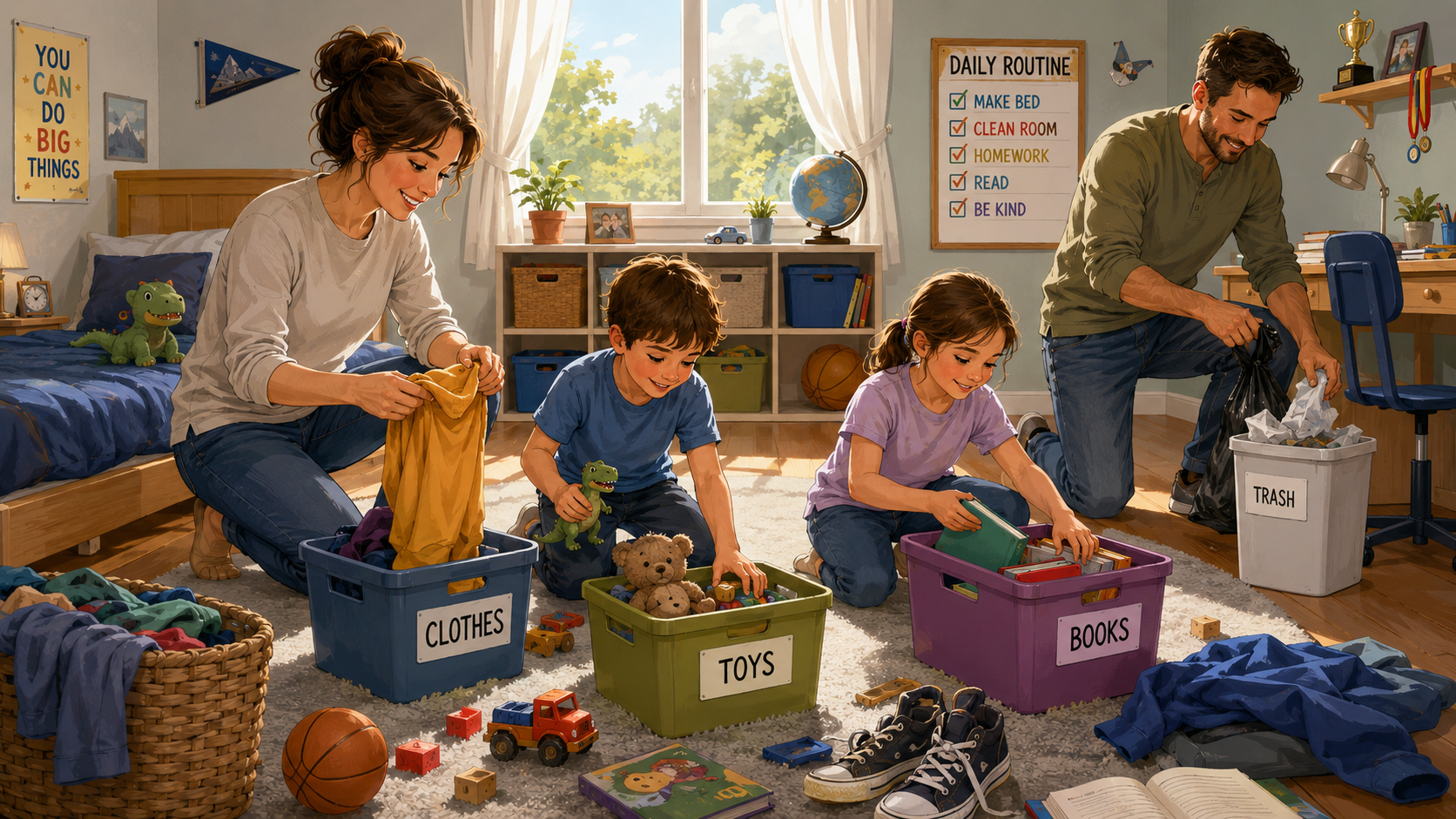
Getting kids to clean their rooms can feel like a daily battle, especially when the mess seems to return minutes after the job is done. Clothes land on the floor, toys migrate under the bed, school papers disappear into mysterious piles and half-finished projects somehow become permanent decor.
But a clean room does not have to depend on nagging, yelling or doing the work yourself after everyone is exhausted. With the right approach, parents can help children build habits, understand expectations and take more ownership of their space.
Here are seven practical tips to get your kid to clean their room.
1. Make the job smaller
“Clean your room” can sound simple to an adult, but to a child it may feel huge and confusing. A messy room contains too many decisions at once: Where do clothes go? What counts as trash? What should happen to toys, books, art supplies and the mysterious object under the bed?
Instead of giving one broad instruction, break the task into smaller steps. Say, “Put all dirty clothes in the hamper,” then, “Put books on the shelf,” then, “Throw away trash.” Smaller jobs are easier to start and easier to finish.
For younger children, use simple categories: clothes, toys, books and trash. For older kids, a short checklist can work well. The goal is to remove the feeling of being overwhelmed.
2. Set a timer
A timer can turn cleaning from an open-ended punishment into a manageable challenge. Try starting with 10 or 15 minutes. Tell your child the goal is not to make the room perfect, but to make noticeable progress before the timer goes off.
This works especially well for kids who resist starting. Once they begin, they may keep going. Even if they stop when the timer ends, the room is better than it was.
You can also use “speed rounds.” For example, challenge your child to pick up as many items as possible in five minutes. Keep the tone light. The timer should create focus, not pressure.
For children who struggle with attention, shorter bursts may work better than one long cleaning session. Three 10-minute sessions can be more effective than 30 minutes of frustration.
3. Give everything a home
Kids are more likely to put things away when they know where things belong. If the room lacks clear storage, “clean up” becomes “move the mess somewhere else.”
Use bins, baskets, shelves and drawers that are easy for your child to use. Labels can help, especially for younger kids. Picture labels are useful for children who cannot yet read.
Avoid overcomplicated systems. A child is unlikely to sort every toy into perfect categories after a long school day. Broad storage zones usually work better: one bin for stuffed animals, one for blocks, one for art supplies, one for sports gear.
If there is not enough room to put things away, the problem may not be the child’s effort. It may be too much stuff. Periodically help your child sort out toys, clothes and items they have outgrown.
4. Clean with them at first
Many children need modeling before they can clean independently. Working alongside your child is not the same as doing the job for them. It teaches the process.
Start by saying, “I’ll help you get started.” Then take one category while your child takes another. You might handle trash while your child gathers clothes. Once momentum builds, step back and let your child continue.
This approach is especially helpful for younger kids or children who become anxious when facing a messy space. It also gives parents a chance to demonstrate what “done” looks like.
As the habit improves, reduce your role. Move from cleaning together, to supervising, to checking the finished room.
5. Use routines instead of threats
Cleaning works better as a routine than a punishment. If children only clean when a parent is angry, they may associate cleaning with conflict.
Choose predictable times for room resets. For example, make it part of the evening routine before screen time, before dinner or before bedtime. Another option is a weekend reset, when the room gets a more thorough cleanup.
Try connecting cleaning to daily life: “Before we start a new activity, let’s put away the last one.” This helps children understand that cleaning is not an arbitrary demand. It is part of taking care of their space.
Consistency matters. A small daily reset is usually easier than a huge weekly cleanup.
6. Offer choices
Children often resist cleaning because they feel controlled. Offering limited choices gives them a sense of ownership while still getting the job done.
Ask, “Do you want to start with clothes or toys?” or “Do you want music while you clean, or do you want quiet?” For older kids, ask whether they want to clean before dinner or after dinner.
The choices should be real, but not unlimited. The choice is not whether the room gets cleaned. The choice is how and when the task begins.
This approach can reduce power struggles and help children feel more responsible for the outcome.
7. Notice progress, not perfection
A child’s room may not meet adult standards, especially at first. If parents only point out what is still wrong, kids may feel defeated and stop trying.
Notice specific progress: “You got all the clothes in the hamper,” or “I can see the floor again.” Specific praise helps children understand what they did well and makes the task feel worthwhile.
That does not mean accepting chaos. It means building the habit step by step. After recognizing progress, you can calmly point to the next task: “Good. Now let’s get the books back on the shelf.”
Over time, expectations can rise. The first goal is cooperation. The next goal is consistency. The long-term goal is independence.
A clean room teaches more than tidiness. It teaches responsibility, decision-making and respect for shared routines. Parents do not have to make the process perfect. They just have to make it clear, consistent and manageable.
With smaller tasks, simple systems and a little patience, room cleaning can become less of a battle and more of a habit. And for many families, that is a win worth celebrating.
========
Maren Calloway is a family lifestyle writer who focuses on practical home routines, parenting strategies and everyday organization. She lives in the Midwest and writes about making family life calmer, simpler and more sustainable. This article was written, in part, utilizing AI tools.







Comments