The Secret Language of Tails: What Your Cat Is Really Saying
Published in Cats & Dogs News
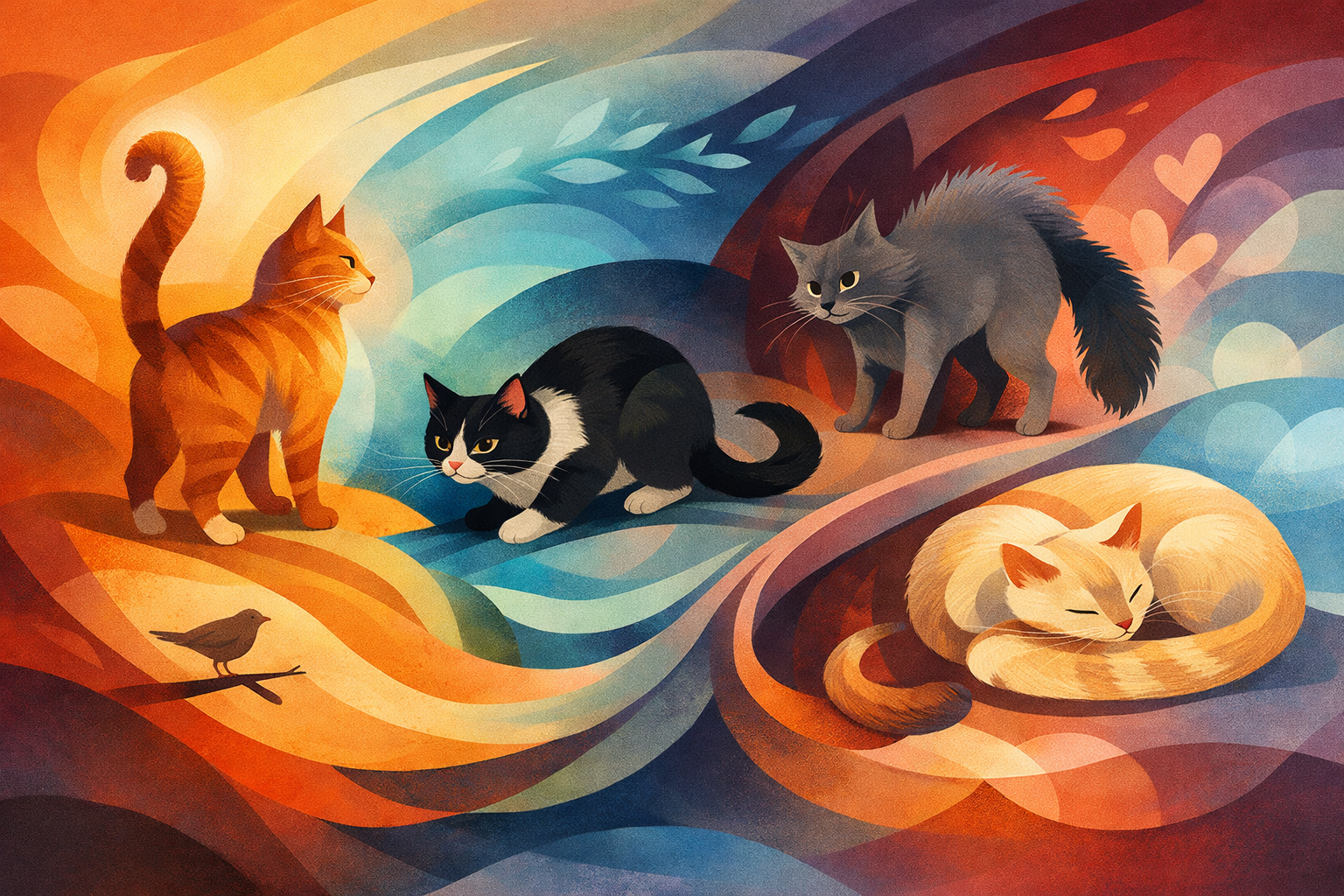
For many cat owners, the most puzzling part of feline companionship is communication. Cats rarely bark, rarely whine, and often appear emotionally unreadable. Yet they are constantly speaking — just not with their voices. Their primary instrument is the tail.
From slow sways to sudden lashes, from confident verticals to nervous wraps, a cat’s tail operates as a living emotional barometer. Learning to read it transforms daily life with cats, replacing guesswork with genuine understanding. What looks like random movement is, in fact, a sophisticated system shaped by evolution, instinct, and social behavior.
The Upright Tail of Confidence
When a cat approaches with its tail held straight up, often with a slight curve at the tip, it is displaying social confidence and emotional comfort. This posture signals recognition and trust, much like a friendly wave or greeting in human terms.
Kittens raise their tails toward their mothers, and adult cats continue this behavior toward individuals they consider safe. When directed at humans, it indicates that the cat views the person as part of its social group. Paired with relaxed ears and slow blinking, the upright tail reflects a cat that feels secure in its environment and relationships.
The Gentle Sway of Curiosity
A slowly moving tail, especially one that drifts rhythmically from side to side, often reflects focused attention and mental engagement. In this state, the cat is processing information and evaluating its surroundings.
This behavior commonly appears when a cat watches birds through a window, tracks a moving object, or encounters something unfamiliar. The body remains still, while the tail quietly narrates the internal analysis. Interrupting a cat during this state is usually tolerated, but repeated disruptions can lead to irritation as concentration is broken.
The Twitch of Irritation
As the tail begins to flick more sharply, emotional tension rises. Rapid movements near the tip often indicate growing annoyance, overstimulation, or conflicting impulses.
This signal is frequently seen during prolonged petting sessions. What begins as pleasure can gradually become sensory overload. The tail provides an early warning system, announcing discomfort before the cat resorts to more obvious behaviors. Owners who recognize this signal can prevent scratches and sudden retreats by respecting the boundary being communicated.
The Lashing Tail of Anger
When a cat’s tail swings forcefully, striking the floor or nearby objects, the emotional state has escalated significantly. This behavior indicates anger, fear, or defensive readiness.
At this stage, the cat’s body becomes tense, pupils may dilate, and ears often flatten. The animal is no longer negotiating its comfort level. It is preparing to act. Attempting to restrain, soothe, or correct a cat in this condition usually intensifies the response. Creating physical distance is the safest and most effective solution.
The Wrapped Tail of Uncertainty
A cat sitting with its tail wrapped tightly around its body often signals emotional uncertainty or mild anxiety. This posture suggests caution and heightened awareness rather than outright fear.
New environments, unfamiliar visitors, loud noises, or changes in routine commonly trigger this response. The cat is not necessarily unhappy, but it is carefully assessing potential risks. Providing quiet spaces and predictable routines helps reduce this guarded behavior over time.
The Puffed Tail of Alarm
Few feline displays are more dramatic than the bottle-brush tail. When fur stands on end and the tail appears to double in size, the cat is experiencing intense fear or excitement.
This response is driven by adrenaline and is largely involuntary. It appears during surprise encounters, sudden noises, or confrontations with other animals. The exaggerated appearance is designed to make the cat look larger and more intimidating. Despite its theatrical quality, it reflects genuine emotional distress and should be taken seriously.
The Slow Wrap of Affection
When a cat wraps its tail loosely around a person’s arm, leg, or another cat, it is expressing social bonding and emotional attachment. This behavior resembles hand-holding in humans.
It appears primarily between closely bonded individuals and signals comfort, familiarity, and trust. Unlike dogs, cats rarely display constant physical affection. These subtle gestures therefore carry significant meaning within feline social systems.
The Sleeping Tail and Emotional Safety
A sleeping cat with its tail relaxed and extended demonstrates deep trust in its surroundings. Sleep leaves animals vulnerable, and relaxed posture indicates confidence in environmental safety.
By contrast, tightly curled sleeping positions suggest lighter sleep and mild vigilance. Observing how a cat rests provides valuable insight into how secure it feels within its home.
Why Tails Matter More Than Meows
Although cats often vocalize with humans, meowing is not their primary communication method. Adult cats rarely meow at one another. Instead, they rely on physical signals developed long before domestication.
Tails, ears, posture, and eye movements form an integrated communication system that predates human companionship by thousands of years. Understanding this system allows people to meet cats on their own terms rather than imposing human emotional interpretations on feline behavior.
Reading the Whole Sentence
A tail alone never tells the entire story. It must be interpreted alongside ear position, eye shape, body tension, vocalizations, and situational context.
A slowly flicking tail during play means something different than the same movement during restraint or medical handling. Cats communicate in layered signals. The tail provides the headline, but the rest of the body supplies the full narrative.
Why Understanding Improves Relationships
When owners learn to recognize tail language, conflicts decrease and trust deepens. Stress behaviors lessen, and cats become more willing to engage socially.
Cats respond positively when their signals are respected. Over time, this builds emotional security and predictability — two factors essential to feline well-being. Understanding tail language does not make cats more obedient. It makes relationships more cooperative, which in feline culture represents the highest form of partnership.
========
Marian Holloway is a science and lifestyle journalist who specializes in animal behavior and human-animal communication. She lives in Vermont with three rescue cats and an ever-growing collection of window perches. This article was written, in part, utilizing AI tools.








Comments