Tips for taking your cat for a walk
Published in Cats & Dogs News
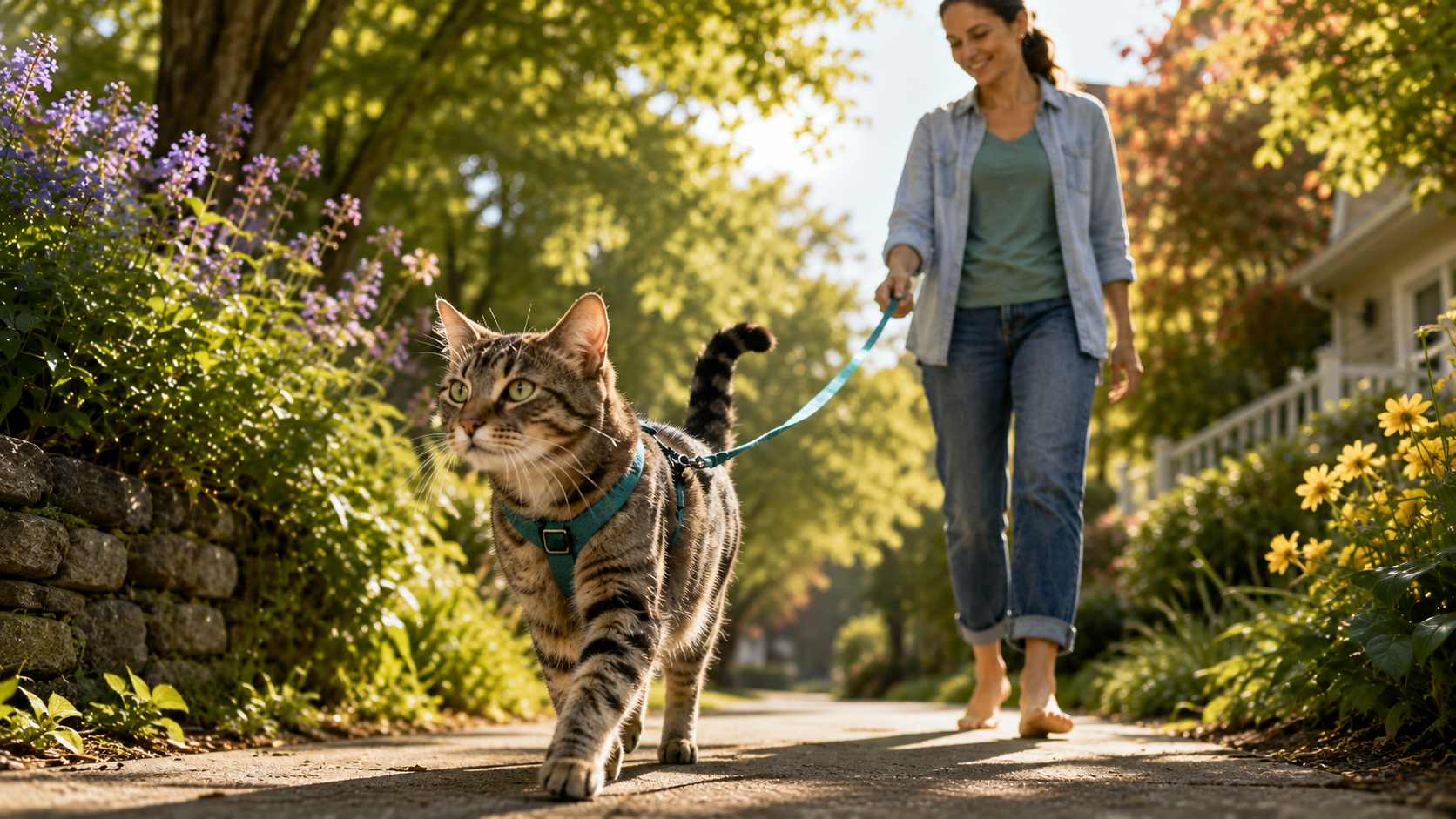
Taking your cat for a walk can sound like a punchline until you meet the right cat.
Some cats are perfectly happy watching the world from a windowsill and would consider a walk an act of betrayal. Others are curious, confident and eager to sniff the breeze, investigate leaves and patrol the front yard like tiny lions with mortgage responsibilities.
The key is to remember that walking a cat is not the same as walking a dog. A dog walk is often about exercise and forward motion. A cat walk is usually about exploration, patience and letting the cat believe the whole thing was its idea.
Start with the right temperament
Not every cat is a candidate for leash walks. A good walking cat is usually curious, fairly confident and not easily panicked by new sounds, people or movement. Kittens and young cats may adapt more quickly, but older cats can learn, too, especially if they are already social and food-motivated.
A shy or fearful cat may be better served by indoor enrichment, a screened porch, a window perch or a secure outdoor “catio.” Forcing a nervous cat outside can backfire, making the cat more anxious and harder to handle.
Watch your cat’s body language. Ears pinned back, a low crouch, wide eyes, tail tucked or frantic attempts to hide are signs to stop. A relaxed cat may sniff, blink, stretch, wander and pause often.
Use a harness, not a collar
Cats should not be walked with a leash clipped to a collar. A frightened cat can slip a collar, choke, or injure its neck. Use a well-fitted cat harness designed to distribute pressure across the chest and shoulders.
Vest-style harnesses often work well because they are harder to escape from and feel more secure. Figure-eight and strap harnesses can work for some cats, but they must be fitted carefully. You should be able to slip a finger or two beneath the harness, but it should not gap enough for the cat to back out.
Before going outside, test the harness indoors. Some cats freeze, flop over or walk backward the first time they wear one. That is normal. Keep the first sessions short, reward calm behavior, and remove the harness before your cat becomes frustrated.
Train indoors first
The outdoor world is full of distractions, so begin inside where your cat feels safe. Let the cat sniff the harness. Place it nearby during meals. Then drape it loosely over the cat for a few seconds, reward, and remove it.
Gradually work up to fastening the harness. Add the leash only after the cat is comfortable wearing the harness. Let the leash drag under supervision, then pick it up lightly. The goal is not to pull the cat around the room. It is to teach the cat that the harness and leash predict treats, attention and interesting experiences.
Use small treats, praise or play as rewards. Training may take days or weeks. A slow start is better than a dramatic escape attempt on the first trip outside.
Choose a safe first outing
A cat’s first outdoor walk should be boring by human standards. That is a compliment. Choose a quiet yard, patio, porch, garden path or calm stretch of sidewalk away from traffic, dogs and crowds.
Avoid busy parks, loud streets, loose dogs, heavily sprayed lawns and areas with thick brush where a startled cat could tangle the leash. Check the weather, too. Hot pavement, cold ground, rain, wind and extreme temperatures can quickly make the outing unpleasant.
Keep the first outdoor visit short. Five minutes may be plenty. Open the door, let the cat observe, and allow it to decide whether to step out. Some cats will march forward. Others will sit in the doorway and sniff. That still counts as progress.
Let your cat set the pace
Walking a cat often looks less like a walk and more like a slow investigation of one square yard of grass. Your cat may sniff a plant for five minutes, sit under a shrub, stare at a bird or suddenly decide the adventure is over.
That is fine. Do not drag or tug. Use the leash as a safety line, not a steering wheel. If you need to guide your cat away from danger, use gentle pressure, treats or pick the cat up if it is safe to do so.
Some cats prefer familiar routes. Others enjoy exploring different corners of the yard. Keep expectations modest. A successful cat walk is one where the cat feels safe, gets enrichment and comes back inside calmly.
Watch for hazards
Outdoor cats face risks, even on a leash. Watch for dogs, cars, bicycles, toxic plants, pesticides, sharp debris, ticks, fleas and wildlife. Keep your cat from chewing unknown plants or drinking from puddles.
Stay alert. A calm cat can bolt if startled by a barking dog or loud truck. Hold the leash securely, but do not wrap it tightly around your hand. A frightened cat may twist, jump or try to back out of the harness.
If a dog approaches, pick up your cat before the situation escalates if you can do so safely. Even friendly dogs can terrify a cat. It is better to retreat early than to test everyone’s manners.
Bring backup
For early walks, consider bringing a cat carrier, backpack carrier or stroller. This gives your cat a safe retreat if it becomes overwhelmed. Some cats enjoy riding to a quiet spot and then stepping out to explore.
A carrier is also useful if your cat refuses to walk back inside. Cats are not famous for accepting schedules. When the walk is over, a carrier can prevent negotiations from becoming a neighborhood drama.
Bring treats, especially in the beginning. A favorite snack can help redirect attention, reward calm behavior and encourage your cat to come back to you.
Keep identification current
Even with a good harness, accidents can happen. Make sure your cat has a microchip with current contact information. A breakaway collar with an ID tag can provide another layer of protection, though it should not be used for leash attachment.
Take a clear recent photo of your cat before beginning outdoor adventures. If the cat ever gets loose, a current photo helps neighbors and shelters identify it quickly.
Know when to stop
A walk should end before your cat is exhausted or frightened. Look for signs of stress: panting, hiding, trembling, flattened ears, frantic pulling, growling, swatting or refusing treats. End the outing calmly and try again another day, possibly in a quieter place or for a shorter time.
Not all cats will become walking cats. That is not failure. The goal is enrichment, not a performance. If your cat prefers a harness-free life indoors, there are plenty of ways to add stimulation: puzzle feeders, window hammocks, climbing shelves, wand toys, tunnels and supervised porch time.
For the right cat, though, a leash walk can be a wonderful routine. It offers smells, sunshine, movement and mental exercise while keeping the cat safer than roaming freely. With patience, the right gear and a willingness to move at feline speed, a simple walk can become a shared adventure — even if you spend most of it standing still while your cat studies one fascinating blade of grass.
========
Maren Ellsbrook writes about pets, home life and everyday problem-solving for readers who like practical advice with a little warmth. She lives with two opinionated cats, one forgiving dog and a collection of garden shoes she rarely wears. This article was written, in part, utilizing AI tools.








Comments